
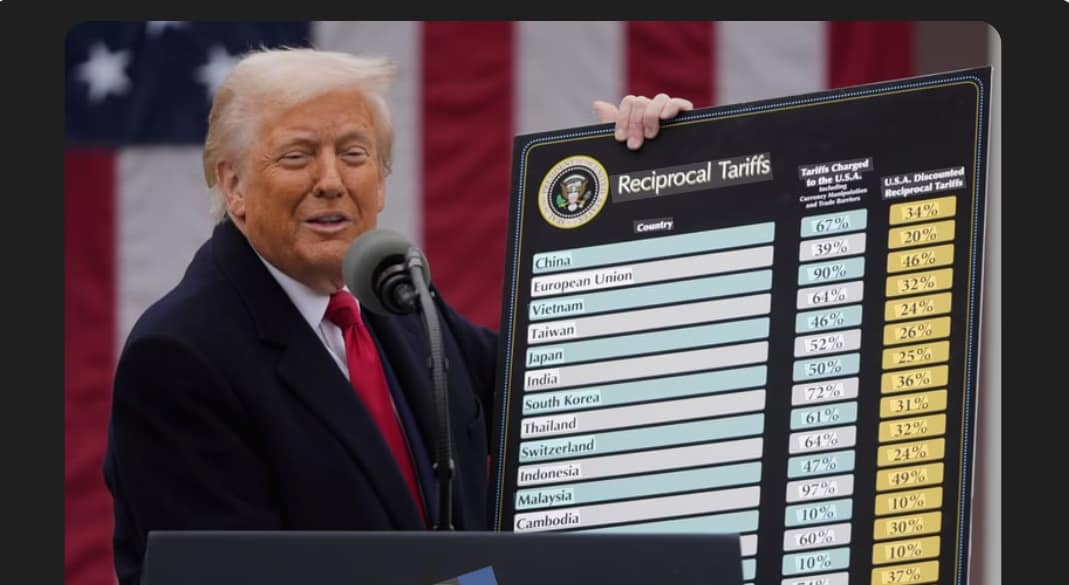
U.S. Trade Policy After the Supreme Court Tariff Ruling: Business & Global Investor Impact (2026 Deep Analysis) – The 2026 decision by the Supreme Court of the United States invalidating key executive-imposed tariffs did more than settle a constitutional debate. It reshaped the operating environment for multinational corporations, small businesses, investors, supply chains, and global trading partners.
While our previous article — Why the Supreme Court Ruled Trump’s Tariffs Illegal in 2026 (Full Legal and Economic Breakdown) — explained the legal reasoning behind the ruling, this Part 2 focuses on what truly matters to markets and business leaders:
How does this ruling change strategy, risk, profitability, and global capital flows?
👉 If you haven’t read the legal breakdown yet, start here:
https://myexpenseplanner.in/blog/why-the-supreme-court-ruled-trumps-tariffs-illegal-in-2026/
Now let’s examine the economic, corporate, and investment consequences.
Table of Contents
1. Immediate Business Reaction: Relief Mixed With Uncertainty
For import-dependent industries, the ruling initially created relief.
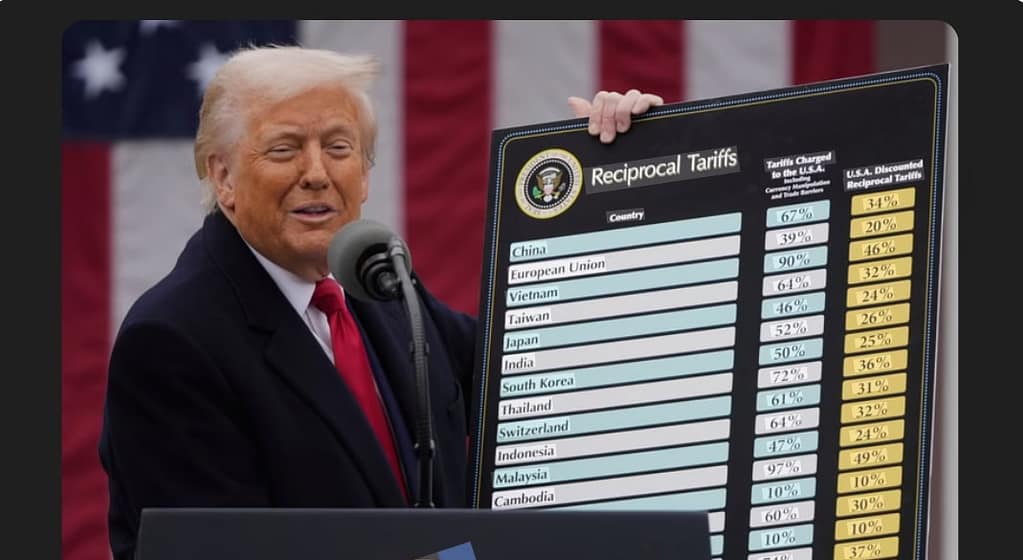
Tariffs function as taxes on imports. When duties increase, businesses either absorb the cost (reducing margins) or pass them on to consumers (raising prices). The removal or suspension of certain emergency-based tariffs reduces that cost burden.
Industries most directly affected include:
- Consumer electronics
- Automotive components
- Apparel and retail
- Industrial machinery
- Construction materials
However, uncertainty remains. While the Court limited one legal pathway for tariffs, other authorities remain available. Businesses must now assess whether future administrations could use alternative trade laws to achieve similar outcomes.
The short-term reaction in financial markets reflected optimism — but cautious optimism.
2. Refund Possibilities: A Massive Financial Variable
One of the most significant economic unknowns involves tariff refunds.
If certain tariffs were imposed unlawfully, importers may be eligible to claim reimbursement. Analysts have suggested that potential refund exposure could reach tens or even hundreds of billions of dollars depending on scope and legal interpretation.
Key questions include:
- Will refunds be automatic?
- Will companies need to file individual claims?
- Will interest be included?
- How far back can claims extend?
For businesses that paid substantial duties, refunds could represent a sudden balance sheet boost. For the federal government, however, large-scale reimbursements could impact fiscal planning.
Investors are closely watching lower court proceedings that will determine refund mechanisms.
3. Supply Chain Recalibration
During the height of tariff uncertainty, many companies restructured global supply chains to reduce exposure. Firms shifted sourcing away from China toward Southeast Asia, Mexico, and India. Others reshored partial production to the United States despite higher labor costs.
Now the calculus changes again.
With the Supreme Court ruling:
- Some companies may reconsider offshoring strategies.
- Others may maintain diversified sourcing to hedge against future political risk.
- Long-term contracts negotiated during tariff periods may remain in place.
Global supply chains operate on multi-year investment cycles. Even if tariffs disappear, companies may avoid rapid reversals.
The lesson for executives is clear: policy volatility has become a permanent risk factor.
4. Impact on U.S. Manufacturing and Domestic Producers
Domestic industries that benefited from tariff protection face renewed competitive pressure.
For example:
- Steel and aluminum producers that enjoyed price support
- Domestic manufacturers shielded from lower-cost imports
- Protected agricultural segments
Without broad emergency tariffs, foreign competitors may regain pricing advantages.
This does not mean U.S. manufacturing collapses — but margins could compress.
Some policymakers argue tariffs preserved jobs in certain sectors. Others argue they raised input costs for downstream industries, offsetting benefits.
The Supreme Court decision reopens this debate but forces it into Congress rather than executive action.
5. Market Impact: Sector-By-Sector Analysis
A. Consumer Discretionary
Lower import costs benefit:
- Retail chains
- E-commerce platforms
- Apparel brands
- Consumer electronics distributors
Profit margins may expand if input costs decline while retail prices remain stable.
B. Technology and Electronics
Many tech products rely on complex global supply chains. Reduced tariff pressure improves cost predictability and potentially boosts hardware earnings.
C. Industrials
Industrial firms importing components may benefit from lower production costs. However, domestic steel producers could see pricing pressure.
D. Agriculture
If foreign retaliation decreases, U.S. agricultural exporters may benefit from improved trade relations.
Markets typically reward predictability. The Court’s ruling reduces one layer of uncertainty but introduces another — congressional involvement.
6. Inflation and Monetary Policy Implications
Tariffs contribute to inflation by increasing the cost of imported goods. Research following earlier trade disputes showed measurable though moderate inflationary effects.
With certain tariffs invalidated:
- Consumer goods inflation could ease
- Input costs may decline
- Pricing pressure may soften in select sectors
However, inflation depends on broader macroeconomic factors:
- Energy prices
- Labor markets
- Monetary policy
- Global supply conditions
The Federal Reserve monitors trade policy closely. Reduced tariff volatility simplifies inflation forecasting models.
7. Global Investor Perspective: Stability vs. Political Risk
International investors evaluate the United States on two dimensions:
- Economic strength
- Policy stability
The Supreme Court ruling reinforces institutional checks and balances. From a global governance perspective, this may increase confidence in the durability of U.S. rule-of-law systems.
Foreign capital tends to favor predictable regulatory environments.
However, political debate around trade remains intense. If Congress passes new tariff authority, volatility could return.
Investors will assess:
- Legislative momentum
- Electoral outcomes
- Geopolitical tensions
For now, markets appear to interpret the decision as a structural stabilizer.
8. Geopolitical and Trade Relationship Implications
Countries affected by prior tariffs — including China, European Union members, Canada, and emerging economies — may view the ruling as a sign of institutional restraint.
Potential effects include:
- Reduced risk of sudden trade escalation
- Greater negotiation transparency
- Improved diplomatic tone
However, trade competition remains strategic. Tariffs are only one tool among many:
- Export controls
- Industrial subsidies
- Sanctions
- Investment screening
The ruling limits one mechanism but does not eliminate trade competition.
9. Corporate Strategy Going Forward
Executives must now operate under a new strategic framework.
Key Strategic Adjustments:
1. Legal Monitoring
Trade compliance teams must closely track congressional proposals and court decisions.
2. Scenario Planning
Companies should model cost exposure under various tariff scenarios.
3. Diversification
Supply chain resilience remains critical even if tariffs decline.
4. Advocacy
Industry groups may increase lobbying efforts in Congress, recognizing that legislative authority is now central.
10. Venture Capital and Emerging Markets
Startups and growth companies often rely heavily on imported components. Reduced tariff risk lowers capital expenditure uncertainty.
Emerging markets integrated into global trade networks may also benefit if U.S. tariff unpredictability declines.
For venture capital investors, supply chain stability reduces one layer of operational risk in hardware-based startups.
11. Small Business Considerations
Large corporations have legal teams and political influence. Small businesses often feel tariff impact more directly.
With emergency tariffs limited:
- Smaller importers may regain cost competitiveness
- Inventory planning becomes easier
- Price forecasting improves
However, small businesses must still prepare for legislative changes.
Trade policy is no longer purely an executive issue — it is now a congressional debate.
12. What Could Congress Do Next?
Several possibilities exist:
- Reassert direct control over tariff authority
- Pass narrowly tailored delegation statutes
- Avoid legislative changes and accept narrower executive powers
The political balance will determine outcomes.
Trade policy could become:
- More bipartisan
- More transparent
- Or more gridlocked
Investors must factor in legislative risk.
13. Long-Term Structural Outlook
The Supreme Court decision marks a structural inflection point.
Long-term expectations:
- Greater judicial scrutiny of executive economic authority
- Stronger separation-of-powers enforcement
- Slower but more durable trade actions
- Reduced emergency-based trade volatility
For global investors, institutional resilience often outweighs short-term policy shifts.
Conclusion: A More Predictable — But Politically Complex — Trade Era
The Supreme Court’s tariff ruling does not eliminate trade policy conflict. It redistributes power.
Executive authority is narrower.
Congressional responsibility is greater.
Businesses face less immediate tariff volatility.
Investors gain institutional reassurance.
Yet uncertainty remains — now centered in legislative halls rather than executive orders.
For global markets, the message is nuanced:
The United States remains committed to trade competition — but within clearer constitutional boundaries.
And in the world of capital allocation, predictability is often as valuable as policy direction.
Leave a Reply