
What Happens to U.S. Trade Policy After a Supreme Court Tariff Ruling? (Legal & Economic Aftermath)
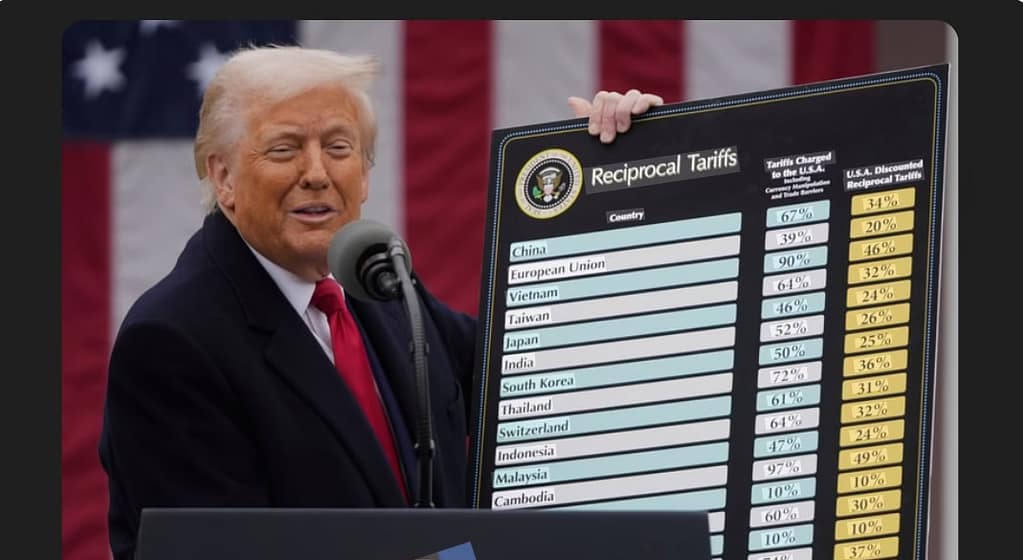
The 2026 decision by the Supreme Court of the United States striking down key executive tariffs has reshaped the landscape of American trade policy. While headlines focused on the political implications for Donald Trump, the deeper impact extends far beyond a single administration.
This ruling marks one of the most significant judicial interventions in trade policy in modern U.S. history. It raises constitutional questions, alters executive authority, affects billions in tariff revenues, and forces Congress to reconsider its role in shaping global commerce.
If you’re looking for a detailed breakdown of why the Court ruled the tariffs illegal, read our earlier analysis here:
👉 https://myexpenseplanner.in/blog/why-the-supreme-court-ruled-trumps-tariffs-illegal-in-2026/
In this article, we focus on what comes next: the legal consequences, economic ripple effects, and the long-term direction of U.S. trade policy.
Table of Contents
1. Understanding What the Supreme Court Actually Changed
The Court ruled that the president exceeded statutory authority when imposing broad-based tariffs under the International Emergency Economic Powers Act (IEEPA). Traditionally, IEEPA has been used for targeted sanctions during national emergencies — not sweeping, across-the-board tariff programs.
The majority opinion emphasized a constitutional principle: Congress controls trade policy under Article I of the Constitution. While Congress may delegate limited powers to the executive branch, those delegations cannot be interpreted so broadly that they effectively hand over unlimited tariff authority.
The ruling did not eliminate all tariffs imposed during the Trump era. Tariffs enacted under:
- Section 232 (national security grounds)
- Section 301 (unfair trade practices investigations)
- Traditional trade statutes passed explicitly by Congress
remain legally intact.
However, the decision significantly narrows the executive branch’s ability to invoke emergency powers for large-scale tariff regimes.
This distinction is crucial. The Court did not reject tariffs as a policy tool. It rejected the legal pathway used to justify them.
2. Separation of Powers: A Constitutional Reset
The most lasting effect of this ruling may be constitutional rather than economic.
For decades, Congress gradually delegated more trade authority to the executive branch for flexibility and speed. Presidents from both parties used this flexibility to negotiate trade agreements, impose targeted duties, and respond to global trade disputes.
But critics argued that such delegation eroded Congress’s constitutional role.
The Supreme Court’s decision restores a clearer boundary:
- Congress writes tariff law.
- The president executes within clearly defined limits.
- Emergency statutes cannot become permanent trade tools.
Legal scholars have described this ruling as part of a broader judicial trend toward limiting expansive interpretations of executive power. It signals that courts may be more willing to scrutinize broad claims of emergency authority across policy areas — not just trade.
In practical terms, future presidents may hesitate before relying on ambiguous statutory language to impose sweeping economic measures.
3. Immediate Trade Policy Consequences
A. Suspension or Removal of Certain Tariffs
With the ruling in effect, the tariffs imposed under IEEPA lose legal standing. Importers who were paying these duties may see them suspended or eliminated, depending on the final implementation timeline.
This reduces:
- Effective tariff rates on specific goods
- Import costs for U.S. businesses
- Trade friction with affected countries
However, other tariff programs remain untouched.
B. Legal Uncertainty Over Refunds
One of the biggest open questions involves refund claims.
If tariffs were unlawfully collected, affected companies may seek reimbursement. Estimates from trade analysts suggest refund exposure could reach into the hundreds of billions of dollars depending on scope and litigation outcomes.
Lower courts will likely determine:
- Whether refunds are automatic
- Whether claims must be individually filed
- Whether the federal government can limit retroactive liability
This process could take years.
C. Shift to Alternative Legal Authorities
The executive branch may pivot to other statutory tools, such as:
- Section 301 investigations
- Section 232 national security claims
- Temporary measures under trade statutes
These alternatives are narrower and often require formal investigation processes.
This makes future tariff implementation slower, more transparent, and more legally defensible.
4. Economic Impact: Markets, Inflation, and Growth
A. Consumer Prices and Inflation
Tariffs function as taxes on imports. When import costs rise, businesses often pass some of those costs to consumers.
Economic studies from institutions such as the Peterson Institute for International Economics and the Tax Foundation have previously estimated that tariff increases during the trade disputes of the late 2010s raised consumer costs and reduced overall economic efficiency.
Removing certain tariffs could:
- Lower prices for imported goods
- Reduce production costs for manufacturers
- Ease inflationary pressures modestly
However, price adjustments are not instantaneous. Supply chains adapt slowly, and some contracts may already reflect higher input costs.
B. Impact on U.S. Businesses
The ruling creates both winners and losers.
Potential beneficiaries:
- Retailers reliant on imported goods
- Manufacturers using imported raw materials
- Small businesses sensitive to cost increases
Potentially disadvantaged sectors:
- Domestic producers that benefited from tariff protection
- Industries shielded from foreign competition
The long-term outcome depends on whether Congress reinstates similar tariff authority through legislation.
C. GDP and Investment Effects
Lower trade barriers generally improve economic efficiency.
Economists often argue that reduced tariffs:
- Increase trade flows
- Encourage competition
- Boost innovation
- Improve capital allocation
However, some policymakers argue tariffs protect domestic industries and jobs. The debate between free trade and protectionism remains politically charged.
Markets initially responded positively to the ruling, reflecting reduced uncertainty and lower input cost expectations.
5. Congressional Responsibility: The Next Phase
The ruling effectively shifts responsibility back to Congress.
If lawmakers believe broad tariff authority is necessary for national security or economic leverage, they must:
- Pass clearer legislation
- Define limits explicitly
- Establish procedural safeguards
Congress now faces strategic choices:
- Reclaim full trade authority
- Delegate limited authority with stricter language
- Avoid action and allow the executive branch to operate within narrower constraints
Political divisions may complicate swift legislative reform.
But one thing is clear: trade policy will require more congressional involvement moving forward.
6. International Reactions and Diplomatic Implications
Global trading partners closely monitor U.S. legal developments.
The invalidation of emergency tariffs may:
- Improve predictability in U.S. trade relations
- Reduce the risk of sudden unilateral tariff hikes
- Strengthen multilateral cooperation
However, countries may remain cautious if alternative statutes remain available.
Trade negotiations could become more stable, but also more complex if congressional approval becomes necessary for major tariff actions.
7. Long-Term Structural Changes in Trade Governance
The ruling may accelerate three structural trends:
1. Institutionalization of Trade Policy
Trade decisions may become more rule-based and less personality-driven.
2. Judicial Oversight of Economic Powers
Courts may increasingly evaluate the limits of executive authority in economic policy.
3. Increased Transparency
Formal investigation processes (such as Section 301 reviews) require public comment periods and evidence-based findings.
This creates greater predictability for businesses and investors.
8. Implications for Investors and Financial Markets
For investors, the key questions are:
- Will tariff volatility decline?
- Will supply chain costs stabilize?
- Will Congress reintroduce broad protectionist tools?
Sectors that may benefit:
- Consumer discretionary
- Technology hardware importers
- Retail supply chains
Sectors facing pressure:
- Steel and aluminum producers
- Protected manufacturing industries
Over the long term, lower tariff uncertainty tends to support market confidence.
9. Political Ramifications
Trade policy has become central to modern U.S. political debate.
The Supreme Court’s intervention could:
- Limit populist trade strategies
- Force bipartisan compromise
- Make tariff implementation slower but more durable
Future administrations must craft trade strategies that withstand judicial scrutiny.
10. What Businesses Should Watch Next
Companies should monitor:
- Congressional proposals to revise tariff authority
- Lower court refund litigation
- New Section 301 or 232 investigations
- Changes in international trade negotiations
Legal risk assessment is now part of trade planning.
11. Is This the End of Aggressive Tariff Policy?
Not necessarily.
Presidents still retain significant authority under:
- Trade Expansion Act
- Trade Act of 1974
- National security provisions
But they must operate within clearer boundaries.
The era of broad emergency-based tariffs may be over. The era of targeted, legally structured trade actions is likely beginning.
Conclusion: A Structural Shift, Not Just a Legal Ruling
The Supreme Court’s decision reshapes the architecture of U.S. trade governance.
It reinforces constitutional separation of powers.
It narrows executive discretion.
It increases congressional responsibility.
It introduces new economic adjustments.
Most importantly, it signals that trade policy must operate within defined legal frameworks.
For businesses, investors, and global partners, the message is clear:
U.S. trade policy is entering a more structured, legally constrained, and potentially more predictable era.
And as Congress debates the future of tariff authority, the next chapter in American trade policy is just beginning.

Leave a Reply to Wan AI Cancel reply