
Why the Supreme Court Ruled Trump’s Tariffs Illegal in 2026 :-On February 20, 2026, the United States Supreme Court delivered a landmark decision that could reshape U.S. trade policy and have wide-ranging economic implications: the Court unanimously struck down the sweeping global tariffs imposed by President Donald Trump using emergency powers under the International Emergency Economic Powers Act (IEEPA).
In a 6 – 3 decision, the Court held that the executive branch lacks legal authority to impose broad tariffs under IEEPA without explicit approval from Congress — dramatically limiting the scope of presidential trade powers and reaffirming constitutional checks on executive action.
Table of Contents
📌 What the Ruling Says
At the center of the dispute was whether the president could use the International Emergency Economic Powers Act — a statute from 1977 — to impose wide-ranging tariffs on foreign imports. Originally intended for narrow emergency actions (such as freezing assets of hostile nations), IEEPA does not explicitly authorize tariffs, the Supreme Court concluded. The majority emphasized that only Congress has the power to lay and collect taxes, duties, and tariffs under the U.S. Constitution.
Chief Justice John Roberts, writing for the majority, wrote that IEEPA’s language empowering the president to “regulate … importation” does not extend to levying taxes on imports. Applying the major questions doctrine, the Court underscored that such significant economic decisions require clear legislative authorization, which IEEPA lacks.
📉 What Tariffs Were Affected?
The ruling directly impacted:
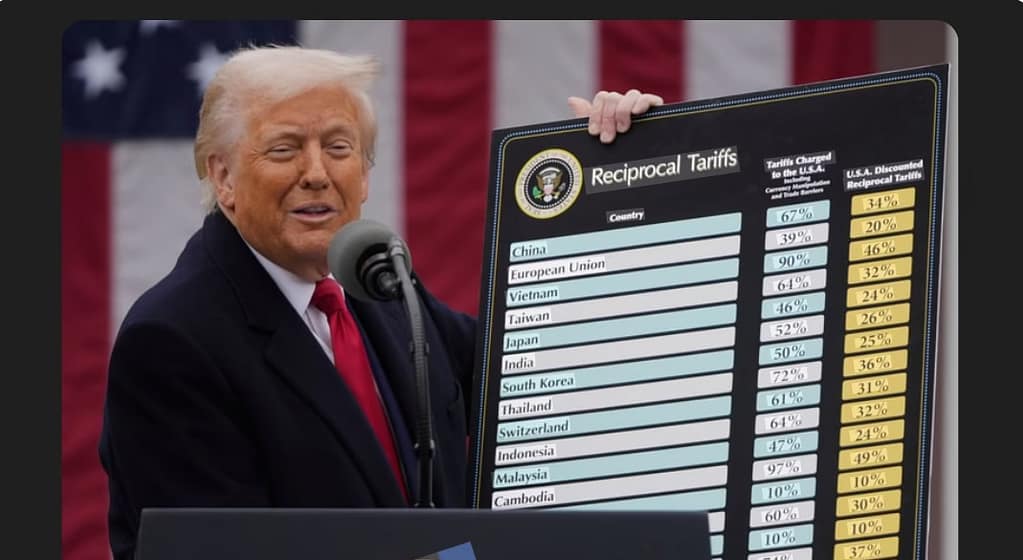
- Reciprocal and “trafficking tariffs” imposed in 2025 on imports from countries like Canada, Mexico, and China, justified as measures against drug trafficking and unfair trade practices.
- Broad 10–25% global tariffs affecting a wide range of goods from most U.S. trading partners, irrespective of trade agreements or economic impact.
However, the decision does not affect tariffs imposed under other statutes. Tariffs justified under Section 232 (national security) or other trade laws remain intact — but their broader use may now be subject to renewed legal and political debate.
🇺🇸 U.S. Domestic Implications
🔹 Limits on Executive Power
The Supreme Court’s ruling is a significant rebuke of unilateral executive action on trade. By reaffirming that Congress controls tariff authority, the decision reinforces the constitutional balance between the legislative and executive branches — particularly for major economic policy decisions.
🔹 Political Fallout
President Trump condemned the ruling as “disloyal” and a “disgrace,” while also vowing to pursue alternative legal bases to reimplement tariff measures, including a temporary 10% global tariff under Section 122 of the Trade Act of 1974.
This proposed strategy — imposing tariffs for 150 days under a different law — highlights that the administration may continue seeking ways to use trade policy as leverage, although such measures are themselves subject to legal challenge.
🔹 Tax and Refund Questions
One of the biggest unresolved issues is whether U.S. importers and companies that paid tariffs will be entitled to refunds. The Supreme Court ruling did not instruct on the refund process, meaning that lower courts and administrative agencies may need to establish procedures for reimbursing billions of dollars in duties already collected.
🔹 Economic and Market Reaction
Financial markets responded positively. Major U.S. stock indices closed higher after the news, as investors reacted to the reduction in trade uncertainty and the possibility of lower costs for businesses previously hurt by high tariffs.
🌎 Global and Trade Partner Responses
🇨🇦 Canada & 🇲🇽 Mexico
Officials in Canada and Mexico welcomed the ruling, framing it as a return to established trade norms and a step toward reducing uncertainty in cross-border commerce.
🇩🇪 Europe and Other Allies
European trade bodies described the decision as affirmation of rules-based international trade, while other global partners are reassessing how to engage with U.S. policy amid ongoing debates over protections and tariffs.
These reactions reflect broader concerns that unpredictable tariff regimes can disrupt global supply chains and investor confidence — issues that may now be mitigated by judicial clarity.
🧠 Broader Economic and Legal Implications
📊 Tariff Levels and Trade Flows
Analyses show the ruling could significantly reduce the trade-weighted average U.S. tariff rate, reversing many of the fee increases instituted in 2025. Early projections estimate a decline from over 15% down toward pre-ruling levels — with implications for consumer prices and global trade balances.
By invalidating the emergency tariff mechanism, the Court has effectively narrowed the tools available to the executive branch for imposing broad trade levies without congressional direction.
📜 Legal Doctrine Reinforced
The decision underscores the major questions doctrine, which requires clear statutory authority from Congress before the government can take action on issues of vast economic or political significance. This will likely influence future cases involving regulatory reach in areas beyond trade, including environmental and technology regulations.
⚖️ Potential Refund Liability
If lower courts order refunds, the U.S. Treasury could face significant financial exposure. Some estimates suggest refund obligations could reach tens to hundreds of billions of dollars, especially if interest and business claims are factored in — potentially complicating federal budget projections.
📌 What Comes Next?
🔹 Alternative Tariff Authorities
The Trump administration has signaled intent to pursue tariff actions under other statutes like Section 232 (security) and Section 301 (unfair trade practices), though these tools often come with legal and procedural hurdles.
🔹 Role of Congress
This ruling may prompt Congress to reconsider its own role in trade policy. Lawmakers could choose to pass new legislation clarifying presidential authority on tariffs — potentially reshaping U.S. trade strategy for years to come.
🔹 International Trade Policy
Other nations may use this moment to push for reforms in bilateral and multilateral trade agreements, integrating clearer dispute mechanisms and tariff rules to avoid similar conflicts in the future.
📊 Conclusion — A Watershed Trade Decision
The Supreme Court’s ruling that Trump’s emergency tariffs were illegal represents a historic reaffirmation of constitutional limits on executive power in trade policy, with deep consequences for domestic markets, international relations, and future regulatory frameworks. While parts of the U.S. trade regime remain intact, the decision marks a major shift in how tariffs can be enacted — and challenged — in the United States.
Ultimately, this ruling not only reshapes the 2026 economic landscape but may also set precedent for executive authority in major economic decisions for decades to come.


Leave a Reply to Yes Nano Banana2 Cancel reply